 Image 1 of 1
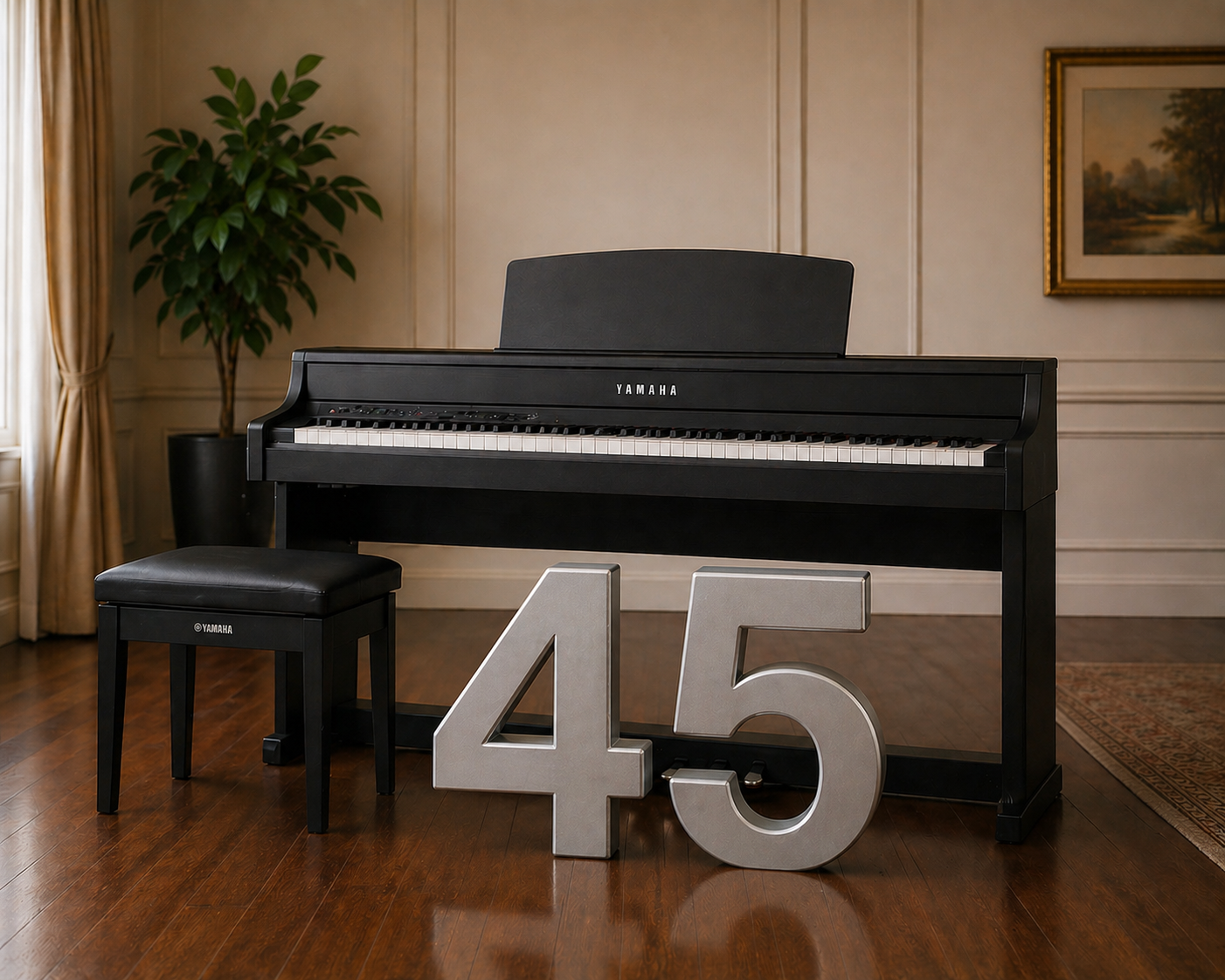
Piano basic playing skills 45 minutes
Level A through Level 2 preparation — basic technical skills, theory, solfège, and listening (piano)
Overview This preparatory track covers foundational piano technique, basic music theory, solfège (sight-singing and ear-training), and focused listening skills. It’s designed for beginners progressing from absolute starter level (Level A) through early elementary (Level 2). Goals are steady technical development, confident reading and rhythm, pitch recognition, and growing musical awareness.
Technical skills (piano)
Posture and hand position: relaxed shoulders, curved fingers, wrists level with keyboard, balanced bench height.
Keyboard geography: note names, middle C reference, octave grouping, simple five-finger positions.
Finger independence exercises: short five-finger patterns in C, G, F major; simple five-note scales and arpeggios (hands separately).
Basic articulation: legato and staccato exercises; connecting and detaching notes with controlled finger release.
Simple dynamic control: forte and piano; producing consistent tone at different volumes.
Coordination: hands-together practice on simple melodies with blocked chords or single-note accompaniment patterns.
Practice routine habits: slow accurate repetition, use of small hands-on segments (1–2 bars), short daily sessions (10–20 minutes) increasing gradually.
Theory
Staff and clefs: treble and bass staff recognition; placement of notes within one octave around middle C.
Note values and rhythm: whole, half, quarter, eighth notes and rests; simple meter (4/4, 3/4) counting aloud.
Key signatures: recognition of C major (no sharps/flats), introduction to G and F major (one sharp, one flat) conceptually.
Intervals: unison, 2nd, 3rd, octave identification on keyboard and on staff.
Basic chord understanding: tonic (I) and dominant (V) in simple tonal context; root position triads.
Simple notation reading: following simple pieces with correct pitch and rhythm; basic repeat signs and phrase markings.
Solfege and singing
Movable-do solfège introduction: do–re–mi–fa–sol–la–ti–do using C major as starting point (Level A) then applying to G/F when introduced.
Singing simple melodies: matching pitch on single-note exercises, then stepwise melodies and basic skips (3rds).
Hand signs (optional): Kodály hand signs to reinforce interval shapes and pitch relationships.
Rhythm solfege/counting aloud: use of syllables (ta, ti-ti) or counted beats while clapping and tapping.
Sight-singing practice: short melodic phrases using solfège, gradually increasing range and rhythmic complexity.
Listening skills
Active listening exercises: identify high vs. low, loud vs. soft, fast vs. slow in short excerpts.
Melody vs. accompaniment: distinguish and sing back a simple melody heard over accompaniment.
Interval recognition by ear: tuned practice identifying unison, 2nd, 3rd, octave; sing back intervals using solfège.
Listening for form: recognize repetition and contrast (A/B) in short pieces.
Timbre and dynamics: identify piano/forte and different instrumental timbres when exposed to recordings.
Sample weekly lesson plan (6–8 weeks cycle)
Week 1–2
Technique: posture, five-finger position, very simple finger patterns in C.
Theory: staff lines/spaces, middle C, whole/half/quarter notes.
Solfège: do–re–mi singing on three-note melodies.
Listening: high/low, loud/soft discrimination.
Week 3–4
Technique: five-note scales in C hands separately; legato/staccato practice.
Theory: simple meter (4/4), quarter and eighth notes; introduce G and F as concepts.
Solfège: expand to five-note melodies, introduce hand signs.
Listening: sing back short melodies; recognize simple intervals (2nd, 3rd).
Week 5–6
Technique: hands together on simple songs, basic chordal accompaniment patterns (I and V).
Theory: root position triads, simple key signatures (C, G, F).
Solfège: sight-sing short phrases in C major; begin movable-do on new keys.
Listening: melody vs. accompaniment, identify A/B form.
Week 7–8
Technique: one-octave scales hands separately in C and G; simple arpeggios.
Theory: reinforce note values, introduce simple dynamics and phrase markings.
Solfège: expanded range, introduce tonic/dominant function in singing
Level A through Level 2 preparation — basic technical skills, theory, solfège, and listening (piano)
Overview This preparatory track covers foundational piano technique, basic music theory, solfège (sight-singing and ear-training), and focused listening skills. It’s designed for beginners progressing from absolute starter level (Level A) through early elementary (Level 2). Goals are steady technical development, confident reading and rhythm, pitch recognition, and growing musical awareness.
Technical skills (piano)
Posture and hand position: relaxed shoulders, curved fingers, wrists level with keyboard, balanced bench height.
Keyboard geography: note names, middle C reference, octave grouping, simple five-finger positions.
Finger independence exercises: short five-finger patterns in C, G, F major; simple five-note scales and arpeggios (hands separately).
Basic articulation: legato and staccato exercises; connecting and detaching notes with controlled finger release.
Simple dynamic control: forte and piano; producing consistent tone at different volumes.
Coordination: hands-together practice on simple melodies with blocked chords or single-note accompaniment patterns.
Practice routine habits: slow accurate repetition, use of small hands-on segments (1–2 bars), short daily sessions (10–20 minutes) increasing gradually.
Theory
Staff and clefs: treble and bass staff recognition; placement of notes within one octave around middle C.
Note values and rhythm: whole, half, quarter, eighth notes and rests; simple meter (4/4, 3/4) counting aloud.
Key signatures: recognition of C major (no sharps/flats), introduction to G and F major (one sharp, one flat) conceptually.
Intervals: unison, 2nd, 3rd, octave identification on keyboard and on staff.
Basic chord understanding: tonic (I) and dominant (V) in simple tonal context; root position triads.
Simple notation reading: following simple pieces with correct pitch and rhythm; basic repeat signs and phrase markings.
Solfege and singing
Movable-do solfège introduction: do–re–mi–fa–sol–la–ti–do using C major as starting point (Level A) then applying to G/F when introduced.
Singing simple melodies: matching pitch on single-note exercises, then stepwise melodies and basic skips (3rds).
Hand signs (optional): Kodály hand signs to reinforce interval shapes and pitch relationships.
Rhythm solfege/counting aloud: use of syllables (ta, ti-ti) or counted beats while clapping and tapping.
Sight-singing practice: short melodic phrases using solfège, gradually increasing range and rhythmic complexity.
Listening skills
Active listening exercises: identify high vs. low, loud vs. soft, fast vs. slow in short excerpts.
Melody vs. accompaniment: distinguish and sing back a simple melody heard over accompaniment.
Interval recognition by ear: tuned practice identifying unison, 2nd, 3rd, octave; sing back intervals using solfège.
Listening for form: recognize repetition and contrast (A/B) in short pieces.
Timbre and dynamics: identify piano/forte and different instrumental timbres when exposed to recordings.
Sample weekly lesson plan (6–8 weeks cycle)
Week 1–2
Technique: posture, five-finger position, very simple finger patterns in C.
Theory: staff lines/spaces, middle C, whole/half/quarter notes.
Solfège: do–re–mi singing on three-note melodies.
Listening: high/low, loud/soft discrimination.
Week 3–4
Technique: five-note scales in C hands separately; legato/staccato practice.
Theory: simple meter (4/4), quarter and eighth notes; introduce G and F as concepts.
Solfège: expand to five-note melodies, introduce hand signs.
Listening: sing back short melodies; recognize simple intervals (2nd, 3rd).
Week 5–6
Technique: hands together on simple songs, basic chordal accompaniment patterns (I and V).
Theory: root position triads, simple key signatures (C, G, F).
Solfège: sight-sing short phrases in C major; begin movable-do on new keys.
Listening: melody vs. accompaniment, identify A/B form.
Week 7–8
Technique: one-octave scales hands separately in C and G; simple arpeggios.
Theory: reinforce note values, introduce simple dynamics and phrase markings.
Solfège: expanded range, introduce tonic/dominant function in singing